Friday, September 13, 2019

Blessings

Earlier today I was talking about a program that provides middle school students with food to take home at the end of the day. The program is called Backpack Blessings. With this being at a public school, I paused and wondered if this were not inappropriate and a subtle form of proselytization upon unaware younglings. I was of course quickly reminded that the students needed food and were getting food so I shouldn't spend too much time being bothered by the name seeing as it would seem they picked the name based on the alliteration... A writing tool I find at times captivating and in other instances tremendously lazy. 

(If anyone wonders why I'm such a strong supporter of keeping things such as prayer out of public schools I'll let you read what my friend Toby had to say about this, Click Here).

As I continued to think however I began to wonder if I didn't also have an issue with the use of the term blessing in this instance altogether. Should the charity of others be considered a blessing? With this question on my mind, I went to my office on a Friday night to begin looking for a definition of the term blessing. 

It was then that I was easily able to find and understand a bit more why I may have had pause in this casual, alliterative, lazy use of the term blessing. First I checked the YOUCAT and found the following, "a blessing is something that comes from God (Latin benedicere; Greek eu-logein = to call good); to bless is a divine, life-giving, and life-preserving action." 

While I found this to be a good starting point, I was not satisfied. So naturally, I turned to the actual Catechism of the Catholic Church for what I hoped to be a more detailed definition. "A blessing or benediction is a prayer invoking God’s power and care upon some person, place, or undertaking. The prayer of benediction acknowledges God as the source of all blessing. Some blessings confer a permanent status: consecration of persons to God, or setting things apart for liturgical usage." 

Here again, I found this to be more detailed and certainly more in-depth, but I did not find satisfaction. 

What I did come to realize is how limited my view on blessings had become. In part, because I grew up with these definitions defining not only what I believed, but what most of those around me knew. A blessing is from God and we are lucky and should thank God if we find ourselves in his good graces. 

Yet what if we took the term blessing and removed the religious implications? Yes, I understand that in doing this I want to completely change the meaning of the word from its origins to mean something else and perhaps I should simply look to use a different word, but instead I've decided to try and craft my own definition of the term. 

I would like to propose that we give the term freedom to mean any type of favor, kindness, charity, and/or love that is shown. In this way, I hope that we can recognize one another as blessings ourselves to one another, as well as recognizing our actions of love and kindness toward one another as kindness. Now perhaps what I'm suggesting is simply a realization or recognition of the divine, the imago Dei, or image of God within all of us that was imprinted upon us and within us by the creator... Which of course I think is true, but perhaps for now on this Friday evening I can keep things a bit more simplified and just leave you all with a blessing of brevity. 

I am curious how you might define blessing.

Peace and Blessings Always
~M

A favorite image of mine just for fun
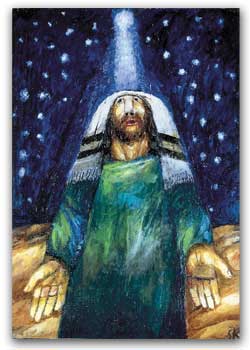
Image result for blessings koder

Friday, August 9, 2019

Why I Personally go to Mass

Yesterday was the feast of St. Dominic, working at a Catholic Dominican college means we not only had a lovely mass, but also a delicious feast day feast. In all honestly, it's been awhile since I'd been to mass on campus. In part because of complicated schedules and in part because I've been pretty pissed at the church lately and haven't made mass attendance a priority. However, as I sat in the pew, listened to the music, sang along to some of the songs, heard scripture, and reflected during the homily I was surprised by the experience of both great calm and motivation. As I was able to sit in the pew I was able to simply sit and relax. Much of the time was spent thinking about a number of non-mass related realities.

Yet after mass I left feeling refreshed and recharged. The reality for me is that I don't often enough take this time in my life to sit and simply be. Sure I take plenty of time to watch movies and Netflix, spend time with friends talking, and every couple weeks find time for catching up on sleep, but I know these moments of relaxation just aren't the same. From the music, the space itself, and the subject matter mass for me becomes a space for relaxing and recharging and honestly that's why I go. That's why I need to recommit to taking time to go to mass.

There is nothing profound about this. There is nothing overly special or insightful about this, I really don't know why I'm writing this as a blog post, perhaps I just needed to share it in a way that was indirect, perhaps these words will help someone else find their way to realizing why they go to mass.

Saturday, March 9, 2019

A Millennial Obsession with Lent

After weeks (possibly months) of trying to find a time to get lunch my friend David and I were finally able to share a meal together this past Thursday.

Having nearly forgotten why we were planning to get lunch in the first place, we simply let the natural progression of conversation take its course. This naturally took us down the path of talking about all matter of Catholic things. It all started however with David saying he had a thought earlier that week and wondered if I might have anything to say or write about the matter.

Seeing as I always have an opinion on practically everything, I did, in fact, have a thought on the matter. However, before this lunch never would have thought about writing about it. So as they say this one's for you David.

The topic was the fact that there seems to be a substantial Millennial obsession with the Lenten season. That preparatory time for Catholics and many/most Christians from Ash Wednesday (or Fat Tuesday) until Easter.

I was naturally inclined to wave my arms through the air and say "but of course Millennial's are obsessed with Lent, however, it has less to do with their being Millennial's and far more to do with the fact of how old the millennials are." David sat patiently and listened as I explained this theory of how Millennial's seemed to be obsessed with Lent because it is a new and exciting practice that they are participating in for the first time as young adults living their own lives. Having less to do with anything other than that they seem to be the right age for the season to have a more outwardly significant value. Older folks simply live their Lenten practices as a part of their daily Lenten existence having formed a deep and lasting relationship with the liturgical season. Young children are first learning about it and struggling with the practice or simply wanting to live in defiance of overly pious parents. Millennials are just the perfect age for the obsession.

While I think, everything outlined above does hold to be true and accurate in some way shape or form for some of the outlined age demographics it cannot be the whole picture for all, including our young Millennial friends. A reality David was ready and aptly pointed out to me. Were it not for David I likely would not have given the topic a second thought. I waved my arms, I said things that made sense and that was the end of it.

Fortunately, that is not the case and David pushed me to think more deeply on the matter. His pushing, in fact, resulted in the festering of the question, "why are Millennial's so obsessed."

What follows, I'm sure will be yet another incomplete understanding of a massive grouping of people, complete with arms waving and all, but is the second conclusion I have come to with regard to this question.

In part, there is a millennial obsession with Lent because there is a millennial obsession with authenticity. Not only are Millennial's committed to authentically living their own lives as their own authentic selves there is a further commitment/expectation by/from Millennial's that institutions, be it corporations, communities, or even the Catholic Church, be authentic as well.

Specifically, during this Lenten season, I think there is a desire among millennial's to see the Catholic Church be authentically herself in apologizing, in asking for forgiveness, for repentance, and for profound humility.

Not only are Millennials looking forward to and obsessed with Lent for their own Lenten practices and experiences but for the Church's as well. Perhaps you've noticed this apparent obsession and wondered why. Hopefully, these insights are worth pondering as you continue to wrestle with this question as I am sure I will as well. Arm waving complete.

Peace and Blessings Always
~M

Saturday, February 9, 2019

Remembering to Listen

Music. I can't read it. I can't play it. I'm told not only can I not sing it but that I have no pitch. Nevertheless, I understand it. It speaks to me.

From the stirring sensation of a Latin chant (Listen here) to the tear-jerking opening to the movie Up (Listen here) music speaks to my soul.

It inspires me, it consoles me, and it is there for me when I need it most. When I cannot put to words my own thoughts or feelings music is there. When I need the motivation to keep working on a paper, reading an article, getting from point a to point b, having fun with friends and remembering fond times, music is there. From moments of great joy to moments of great consolation and everything in between music has the answer. All we have to do is sit and remember to listen. 

Thursday, January 3, 2019

A Place to Call Home

I think it is important to start this by stating the obvious. The Church has failed. Beyond that, the Church has truly been reprehensible. This blog is by no means an attempt to argue otherwise. This is not a time to defend the Church or call people's attention to the good that the Church has done and does do. This is a time to point out that the Church has failed in ways that are beyond my imagining. I've read the accounts of survivors of the Churches atrocities. I've spent countless hours reading them, I've spent countless hours thinking about them. I've lost sleep. And yet still I stay.

This blog is a reflection on the question of how I could possibly stay a part of an organization that has done so much evil all while claiming to be an institution not only for good but for salvation? This is not the first time I've asked myself this question and I am certain it won't be the last time I find myself asking it in the years or even weeks to come.

Ever since August, this question has been scratching away at the back of my mind. If you read my last post from September I think you can see this question present there. I'd love nothing more than to be able to say that I stay in the Church because of the Eucharist. I'd love to be able to say that participation in this most awe-inspiring Sacrament that the reception of the Body and Blood of my Lord and Savior Jesus Christ is the reason I stay in the Church. However, the simple reality is that this is not the sole reason for my staying. It's never going to be the answer that first comes to mind in a most satisfying way. Similarly, I'd like to say that it is the long and rich history that the Church has that keeps me as a part of the institution. Again this is not the case. Please don't read this the wrong way. These are both deeply important to me and occupy a place of importance in my life. Yet they are not enough.

These things that in the face of sexual abuse become seemingly trivial are not the reason I remain Catholic.

So the question that remains is what is the reason I stay Catholic. Is it simply the fact that I've been Catholic my whole life and I'm not willing, courageous, or brazen enough to leave? Is it because I spent six years earning two degrees in the field of theology that I stay? Very happily I'm glad to say these are not the reasons. So what is it?

What could possibly convince me to stay, not only a part but a fairly active and involved part of this institution that has given hundreds of thousands of peoples more reasons than necessary to leave and not just leave, but deeply and passionately, hate the Church? Reasons that I might point out are completely sound and valid.

So what the fuck am I doing? How can I willingly participate in an institution that has failed so miserably it has done the exact opposite of what it was intended and professes to do?

The answer to this has not been easy to come by. At least the simple and feeble attempt at articulating the reason in a concise and authentic way was not something that I could simply logic out.

One of the first glimpses of hope in being able to articulate my answer was found when reading Pope Francis's book The Name of God is Mercy specifically the following passage, "The Church does not exist to condemn people but to bring about an encounter with the visceral love of God's mercy. I often say that in order for this to happen, it is necessary to go out: to go out from the church and the parishes, to go outside and look for people where they live, where they suffer, and where they hope" (52). The last part of this is what spoke to me the most. Where they live, suffer, and hope. As I read this I thought aloud to myself. These are things we do where we are most comfortable, and sometimes that means we do them within the church as well as outside the church.

The second bit of inspiration that helped me in begging to write this blog was remembering a song I'd not listened to in ages. While I cannot remember exactly what it was, there was a moment today where I heard something and it made me think of the song Homeward Bound (Listen Here). This isn't the popular Simon and Garfunkel song, but I assure you I think it is well worth your time to listen.

Now for whatever reason, this song speaks to me, I truly do just love it. From the lyrics to the calm feeling that rushes over me when I hear it I like the song. As I thought about that I realized how odd it may be to others that I like this song. Specifically, I thought about how there are those who would ridicule me for liking the song. That is the thought that led to the simplest, dumbest, yet most profound answer I've come to grips with as to why I stay.

When I have most needed it, the Church has been a place for me to call home. It has been a place that has not judged me for liking the odd music I like. It has not judged me for the way that I articulate things including my repeated use of articulate. As a part of the Church, I have never had to defend myself.

Now as a straight, white, cisgender male this is perhaps one of the most privileged statements I could make. And I know my recognizing that is only a first step. But I also know that the Church has not been a place to call home for many people. However, it is my hope that by staying, by remaining a part of this broken institution that has failed in so many ways I might be able to make the necessary changes within the Church to ensure that moving forward it is a place to call home for those who have been marginalized (including those who have previously been marginalized by the Church).

This may be selfish, this may be shallow, it may even be arrogant, but for now, it is the only way I can make sense of why I am willing to stay. I know this really might not answer the root question, it may not be a sufficient enough answer, but for now, it's what I'm able to articulate about my experience and how I feel in this moment while listening to Homeward Bound for the hundredth time today.


Peace and Blessings Always
~M


Tuesday, September 11, 2018

The Word of the Day is Ephphatha!


For several weeks now I have been struggling through the latest Church scandals. As article after article and revelation after revelation continue to come to light I find my days spent reading more and more trying to figure out what exactly my thoughts are. My brother noted while sharing an article with me "that my week was about to become a whole Hell of a lot worse." he was right and his pun was well noted and appreciated.

The days have been long the weeks have been restless and each new article, each new gruesome detail has weighed on me/my soul in a way that can only be described as exhausting.

Since the first notions of this scandal, this abysmal, unconscionable, shameful, current state of the Church I stated that "As much as I might want it to be, as much as I might want to, this is not the time to defend the Church. What is needed now is justice and immense reform." I've spent countless hours wanting nothing more than to yell loudly. I have spent time yelling loudly, both in living reality and by means of sharing statuses and articles on Facebook. Likewise, I attempted to get away from it all. I tried to avoid the topic altogether. I tried not talking about it, reading about it, or thinking about it. This only resulted in my thinking and reading about it all the more.

I have spent countless hours talking through and examining the nuanced details of the Church, in my own way trying desperately to muddle through this bleak existence as a Catholic in the Church today without coming to the conclusion that the only path forward is to burn it all down. None of this seemed to be enough, as I continued to read article after article and have conversation after conversation the weight, the immense weight, continued to utterly crush me.

Until one night I sat at my desk looking at all the books, specifically all my Catholic theological books, I love so much and began to weep. A single tear slide down my cheek. Fortunately, I have amazing friends and family who listen to me and support me when I need it most. From phone calls to Facebook messages to turning bible study into a small group working through this issue together, I continue to read and dialogue.

Yet still, I found myself lacking sufficient words. Angrily yelling about the need for priests to be defrocked and referring to bishops letters as toothless and spineless is rarely productive and not a message that encapsulates all that I feel in the present moments of my life as a Catholic.

Then I went to mass on Sunday and heard the gospel reading paired with an inspirational homily. As I sat in the pew in the back I realized I finally know what I want to say...

The word of the day is Ephphatha, a Greek word meaning 'be opened.' As the mass continued on I began to think specifically how this notion of being open was directly linked to what I was feeling with regard to the Church and the sex abuse scandal.

What the Church needs now is to be opened. What Catholics need now is to be opened. Open to change! Open to admitting that priest, bishops, cardinals, and popes have failed. Open to the devastating reality that this scandal is real and that it has torn people apart. Open to hearing the accounts of the victims brutally attacked, physically, mentally, emotionally, spiritually, and I'm sure in ways I can't even begin to imagine. The Church needs to be open to the criticism of the secular world, as well as her own people. Open to the reality that Church officials and former priests need to be sitting in a jail cell. The Church needs to be open moving forward providing transparency.

There is so much that the Church needs to be open to at this time. As part of the Church, I also need to be open to all of these things.

It won't be easy, it will become a whole hell of a lot worse, and it will weight on my soul. Fortunately, I have the support I need. I hope I can be that same support to others in my openness.

Sunday, August 12, 2018

That’s Not How Prayer Works!

For the past three years, this has not only been a phrase I have found myself saying (yelling) with great frequency, it has become a bit of an inside joke with my family.

The better portion of the last six years of my life has been spent studying theology and spirituality in an academic setting. While this has been a tremendously informative and formative time of my life and I wouldn’t change it for anything I’m now however left trying to navigate how to utilize this knowledge in a way that is beneficial to the Church and those around me, as well as myself. Often enough, the best application of this knowledge, much to my dismay, is not in a lecture, or yelling of that’s not how prayer works.

As I continued to know that ‘That’s not how prayer works’ I couldn’t figure out how to adequately express that without people rolling their eyes thinking that’s just Mike yelling again… My solution to this came from an impromptu conversation before daily mass and from further reflection on a gospel passage several weeks later.

The conversation before mass and the account of a leper crying out asking to be healed. Both reminded me that at the end of the day prayer is a profound act of faith. While it selling a house may not be the result of a Joseph statue being buried in the yard, the act can still very much be a prayer. Getting a seat on an airplane while flying standby may not be the result of prayer, yet that doesn’t mean a prayer was not said.

Prayer, after all, is a profound act of faith that places the one praying in relationship with God. More accurately prayer as a profound act of faith places one in relatio with God. Use of relatio is an intentional use of the Latin root for the term. Instead of using relationship, which has its own meanings in society, relatio can be used to mean the fullness of relationship between the one who prays and God, Jesus, and the Holy Spirit. Moving beyond the common platitudes of relationship as simply two good friends or even familial relationships, not to belittle these, provides an understanding of prayer as relatio, that places the one praying standing side by side with God, both looking upon that which God is looking at. As one prays in relatio to God they find that God’s loving gaze falls upon them. Even as they stand side-by-side, God’s loving gaze finds its way to look upon them.

With this complex and somewhat jarring understanding of prayer as relatio, it similar to many things in life is far easier said than done. Living this life of prayer, with prayer as relatio is no easy task and is in all reality a journey of each individual soul, in communion with all people of faith. In this way, and with this understanding of what prayer is, one can make a radical shift from having a prayer life to living instead a life of prayer.

A life of prayer is filled with relationship, as well as words, but also with beautiful and profound silence. Hans Urs Von Balthasar succinctly points out “the most intimate moments of human interaction are characterized not only by words but also by the more revealing absence of words” (Communio International Catholic Review “Toward a Theology of Christian Prayer). So too can this be said about prayer. The most intimate moments of prayer can be marked not only by the words that are uttered but also by the profound and at times deafening silence. A life of prayer begins to recognize that when one places oneself in relatio with God they are no longer limiting God’s presence in their life to the moments of prayer that they set aside for God. No longer is prayer regarded as a thing one does before meals, on Sundays at worship, or in times of need. Instead, prayer becomes a way of life.

 When one finds oneself living a life of prayer rather than having a prayer life they are likely to notice the true nature of prayer. Prayer, after all, is not meant to be in competition with other activities. In the place of a shallow and superficial understanding of prayer and relationship with God, one is able to breathe deeply knowing that they are living a life that draws them closer to union with God. A life that is no longer distracted by things that ultimately limit our potential. Instead one finds that their life is suddenly making more sense. They experience what it is like to live a life shoulder to shoulder with Jesus.